
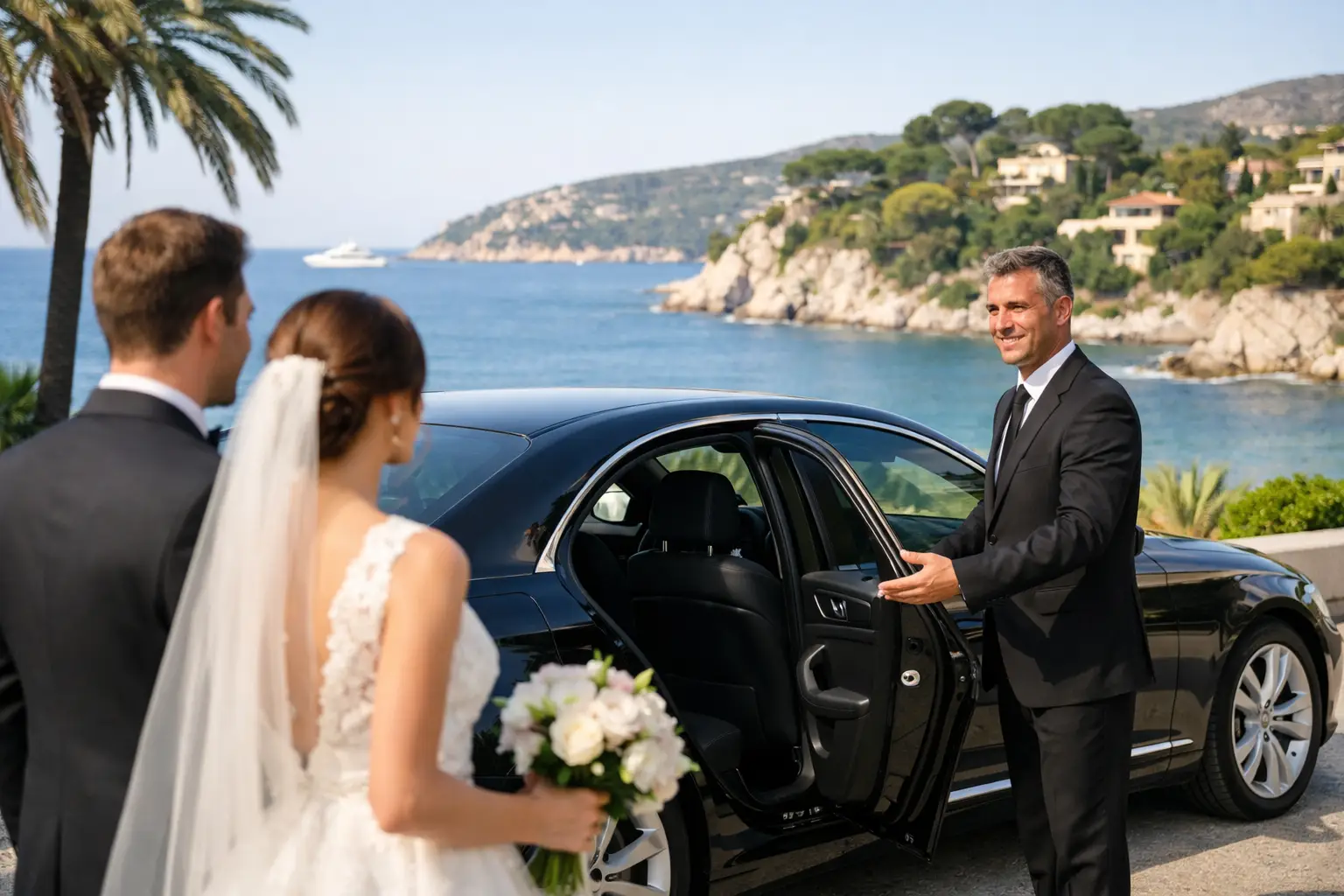
A wedding timetable can look perfect on paper and still unravel between the hotel lobby, ceremony entrance, photography location, and reception. This guide to wedding chauffeur planning is designed to prevent those small transport gaps from becoming visible stresses on a day that deserves calm, polished coordination.
For a celebration on the French Riviera, transportation is not simply about getting from one address to another. It is part of the guest experience, the visual presentation, and the timing behind every meaningful moment. A professional chauffeur plan gives the couple, family, and guests a reliable structure while leaving room for the natural pace of the day.
Start Your Wedding Chauffeur Plan With the Schedule
Begin with the moments that cannot move: the ceremony start time, legal appointments, venue access windows, and the reception entrance. Then work backward. A chauffeur should arrive before the requested pickup time, but the pickup itself needs to account for elevator waits, formalwear adjustments, photography, and the understandable tendency for a wedding party to run a few minutes behind.
For the couple, allow more time than a standard transfer would require. The bride may need help entering the vehicle without disturbing the dress, and a photographer may want a few minutes of departure footage. A ten-minute drive can easily become a thirty-minute transportation window once these details are included.
Share the complete timeline with your chauffeur provider, including venue contacts, exact entrances, and a mobile number for the wedding planner or best person. A street address alone is rarely enough for a villa, estate, beach club, or hilltop property with several gates. Clear instructions help the chauffeur arrive at the right entrance without calling the couple during preparations.
Choose Vehicles Around People, Not Just Style
The wedding car should reflect the occasion, but it must also work for the people using it. A luxury sedan may be an elegant choice for the couple, while a spacious van is usually more practical for parents, bridesmaids, groomsmen, or guests traveling with luggage from the airport in Nice.
Think carefully about dress volume, mobility, and the number of passengers. A vehicle that appears generous in photographs may not comfortably accommodate a large gown, formal shoes, flowers, and a photographer’s equipment. If there is any uncertainty, ask about interior space and luggage capacity before confirming the reservation.
A well-built plan often uses more than one vehicle. One chauffeur can focus entirely on the couple’s movements, while another handles family members or transfers between the ceremony and reception. This prevents the newlyweds from waiting while a vehicle completes an unrelated guest journey.
For guests with young children, reserve appropriate baby or child seats in advance and confirm the children’s ages. For older relatives, ask whether the pickup point has stairs, uneven paths, or a long walk from the vehicle entrance. Premium service is often defined by these practical considerations, not by the badge on the car.
Plan for a Dedicated Couple’s Car
A dedicated vehicle for the couple offers valuable flexibility. It can remain close by for portraits, an unexpected wardrobe adjustment, or a quiet pause between the ceremony and reception. It also protects the wedding timeline from becoming dependent on the movement of other guests.
If the reception is late into the evening, decide whether the couple’s chauffeur should remain on standby or return for a pre-arranged departure. Standby service is useful when the final timing is uncertain, while a fixed pickup can be more efficient for a tightly managed event. The right choice depends on the venue, the schedule, and how much flexibility you want after dinner and dancing.
Map Every Guest Movement in Advance
The most common wedding transport problem is not the couple’s transfer. It is the guests who are staying in different hotels, arriving on different flights, or leaving before the reception ends. Create a simple movement plan that separates guests into groups with similar departure points and timelines.
For example, guests staying in Cannes may need a coordinated return after a coastal reception, while family members based in Antibes may require an earlier pickup for ceremony preparations. Visitors arriving from Monaco may need extra time during major events or weekend traffic. If your celebration includes guests continuing to Saint-Tropez, plan that journey with realistic travel time rather than relying on an optimistic map estimate.
Avoid asking one chauffeur to make a string of tightly timed pickups across multiple towns unless the route has generous margins. The French Riviera is beautiful precisely because roads often follow the coastline, pass through busy resort areas, or climb toward private venues. Traffic, parking restrictions, and seasonal congestion can affect even short distances.
For larger groups, provide every guest with the transportation contact details and pickup instructions before the wedding day. Include the exact meeting point, not just the hotel name. Guests feel more comfortable when they know where to wait and whom to contact, and the couple is spared a stream of last-minute messages.
Build Timing Buffers That Feel Invisible
The best wedding transport plan does not look overly scheduled. It simply makes everyone feel that the next vehicle is ready when needed. That requires buffers at the points where delays are most likely: hotel departures, ceremony exits, photo sessions, and late-night returns.
Allow additional time when traveling from the airport in Nice on the wedding day, particularly for international arrivals. Flight monitoring and a meet-and-greet service can remove uncertainty, but guests still need time to collect bags, regroup, and settle after a long journey. For VIP family members, booking a private transfer rather than asking them to coordinate with other arrivals is often worth the added control.
Consider parking access as part of your timing, too. Some waterfront venues allow only limited vehicle access, while private properties may require chauffeurs to coordinate with security or a gatekeeper. Ask the venue whether vehicles can wait on site, where they must stage between transfers, and whether there are restrictions after dark.
Coordinate With Your Planner, Venue, and Photographer
Your chauffeur provider should work from the same version of the schedule as the planner and venue coordinator. A small change to the ceremony entrance or photo location can affect the entire transport sequence. Confirm the final itinerary a few days before the wedding, then share any day-of changes through one designated contact.
The photographer also benefits from knowing the vehicle plan. If you want arrival photographs, a departure shot, or portraits beside the car, schedule those moments rather than hoping they fit into an already tight transition. This keeps the chauffeur ready and preserves the natural flow of the day.
Discretion matters as much as timing. A professional chauffeur understands when to offer assistance, when to communicate with the planner, and when to step back so the focus remains on the couple and their guests. That measured service is especially valuable when high-profile guests, executives, or family members prefer privacy.
Make a Weekend of the Celebration
A Riviera wedding often brings guests together for more than one day, which creates an opportunity to organize transportation beyond the ceremony itself. In Nice, visitors may enjoy the Promenade des Anglais, the Old Town, and a relaxed pre-wedding dinner. Around Antibes, the old port and the Cap d’Antibes coastline offer an appealing setting for a daytime outing.
Guests staying near Cannes may want time along the Croisette or a visit to the old quarter of Le Suquet. Monaco adds a more formal option for a dinner or evening visit, while Saint-Tropez can suit a beach gathering or farewell lunch when the schedule allows. Pre-booked chauffeur service lets everyone enjoy these plans without dividing the group between rental cars, taxis, and uncertain late-night rides.
Confirm the Details That Protect the Day
Before finalizing your booking, confirm the vehicle model or category, passenger capacity, luggage allowance, child-seat requirements, pickup addresses, standby arrangements, and cancellation terms. Ask how the provider handles flight delays for arriving guests, changes to the schedule, and communication outside standard hours.
Fixed pricing is especially reassuring for weddings because it makes budgeting clearer. You should know what is included before the day begins, rather than wondering whether waiting time, route changes, or late finishes will create unexpected costs. Clear confirmation also gives the planner a document to work from when coordinating vendors.
A thoughtful chauffeur plan gives the wedding party something more valuable than transportation: time to be present. For your next celebration, choose VIPazur for professional chauffeurs, immaculate premium vehicles, fixed pricing, attentive coordination, and the discretion needed to make every arrival and departure feel properly cared for.