
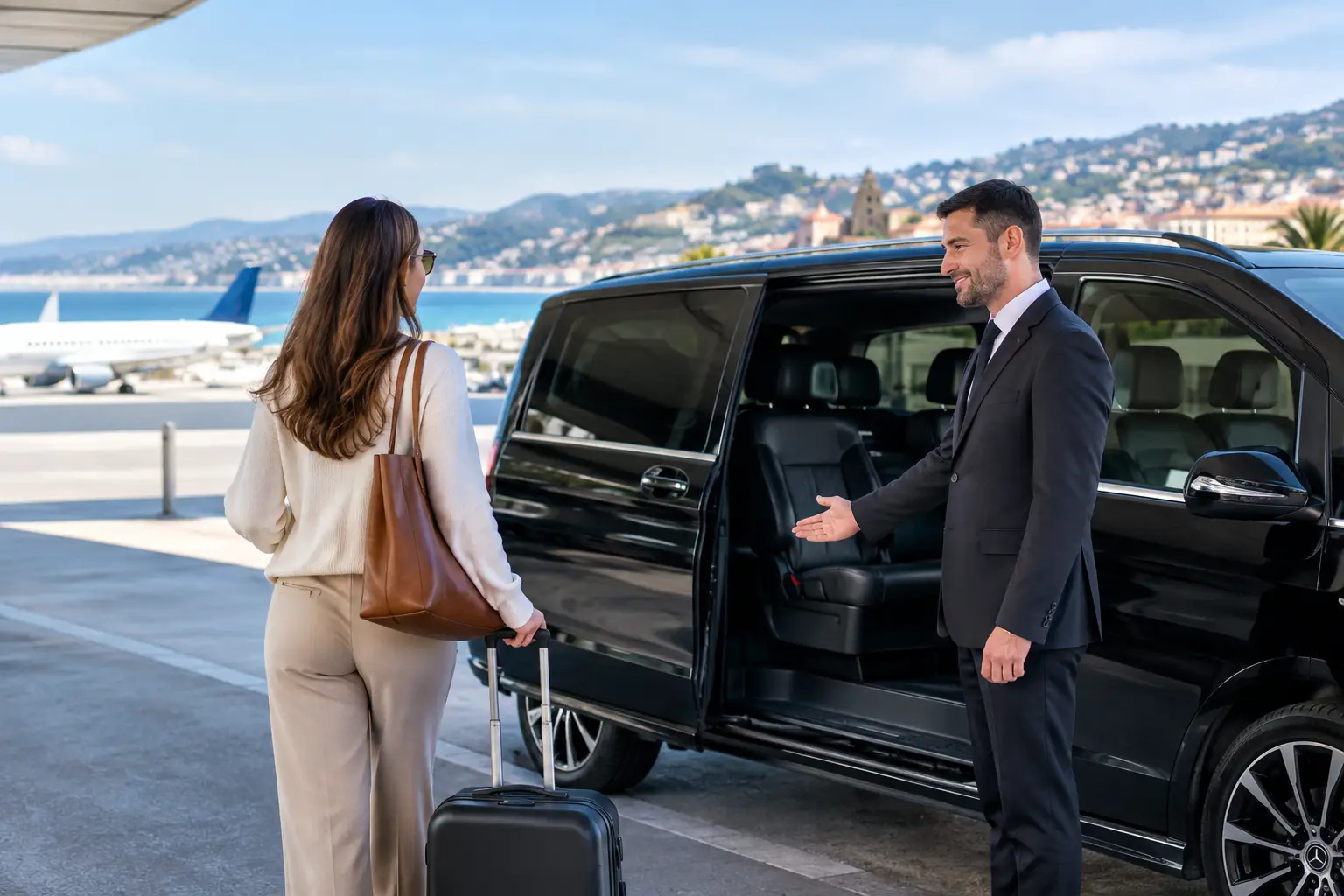
Landing at the airport in Nice should feel like the beginning of the French Riviera, not the first logistical problem of the trip. Yet the top airport arrival mistakes often happen before travelers have collected a suitcase: an unclear pickup plan, an underestimated transfer time, or a vehicle that is not right for the group. A little preparation protects the comfort, privacy, and punctuality that make a premium stay memorable.
Why airport arrival plans matter more than travelers expect
An airport arrival has moving parts that do not appear on an itinerary. Flights can arrive early or late, passport control can take longer than expected, and luggage may be delayed. At peak periods, the roadway outside the airport in Nice can be busy as travelers, hotel shuttles, taxis, and private vehicles compete for space.
For business travelers, the cost of a poor arrival plan may be a delayed meeting in Monaco or Cannes. For families, it can mean managing tired children, strollers, and several bags in an unfamiliar terminal. For couples beginning a Riviera holiday, it can put unnecessary pressure on what should be an effortless first afternoon.
A pre-arranged chauffeur transfer does not remove every variable from air travel, but it gives the ground journey a clear owner. Flight monitoring, a confirmed meeting point, and a chauffeur prepared for the party’s requirements turn an uncertain handoff into an organized welcome.
The top airport arrival mistakes travelers can avoid
1. Booking transportation after the plane lands
Waiting until arrival to arrange a ride is one of the most common errors, particularly during summer, major conferences, film events, and holiday weekends. Availability can be limited just when demand is highest. The result may be a long wait, a vehicle that does not suit the party, or unclear pricing after a tiring flight.
Pre-booking is especially valuable for travelers continuing to Antibes, Cannes, Monaco, or Saint-Tropez, where the journey can be considerably longer than a short ride into the city. A confirmed chauffeur and fixed price provide certainty before departure, rather than requiring decisions beside the curb.
There is one exception: a flexible solo traveler with no time-sensitive plans may be comfortable taking a spontaneous approach in a quiet period. Even then, convenience is not the same as assurance. For families, executive travelers, and guests with reservations waiting at the destination, advance arrangements are generally the better choice.
2. Forgetting to allow for passport control and baggage claim
The landing time on a ticket is not the time a passenger reaches the arrivals hall. On an international flight, immigration queues, baggage delivery, and customs can add significant time. Travelers sometimes schedule a pickup based on wheels-down and then worry that their driver has left before they appear.
The right approach is not to rush through the terminal. Choose a service that tracks the flight and includes airport waiting time, so the chauffeur adjusts to the actual arrival rather than an estimate. This is particularly reassuring when traveling with children, older relatives, or valuable luggage that should never be hurried.
Keep a charged phone accessible, but do not rely on a last-minute text as the only plan. Before flying, confirm the booking details, the passenger name, the destination, and the meeting instructions. Clear communication makes a delayed bag an inconvenience, not a transportation crisis.
3. Choosing a car based only on passenger count
A sedan may comfortably carry two passengers but not necessarily two passengers, four large suitcases, garment bags, and a stroller. This is an easy mistake on a short booking form, especially when travelers focus on the number of seats and overlook luggage capacity.
Be precise about what you are bringing. Mention oversized cases, golf bags, ski equipment, folding wheelchairs, strollers, or substantial hand luggage when reserving. A suitable vehicle offers more than space for bags: it allows passengers to travel comfortably after a long flight without luggage crowded into the cabin.
The same principle applies to groups. Two families arriving together may need a larger premium vehicle or multiple vehicles, depending on children, seats, and baggage. The most elegant transfer is the one that feels properly planned, not improvised.
4. Assuming a child seat will be available
Families should never leave child seating to chance. Requirements differ by a child’s age, height, and weight, and a premium airport arrival should begin with the right equipment already installed or ready for the family.
When booking, provide each child’s details and specify whether an infant seat, toddler seat, or booster is required. If you are bringing your own seat, explain that as well. This small conversation before travel avoids delays at the airport and makes the first drive safer and more comfortable for everyone.
5. Using vague meeting instructions
“Meet outside” is not a reliable pickup plan at a busy airport. Terminals have different exits, arrivals areas change, and travelers may lose connectivity after landing. Without a defined meeting procedure, a chauffeur and passenger can be only a few yards apart and still waste valuable time trying to locate one another.
A proper meet-and-greet arrangement should state where the chauffeur will wait, how the passenger will recognize them, and which contact number to use if needed. For international visitors, this removes the anxiety of navigating an unfamiliar airport environment immediately after a flight.
Discretion can also be part of the plan. Business travelers, public-facing guests, and families who value privacy can request a calm, professional reception without drawing attention. The best service feels attentive without being intrusive.
6. Not sharing the full itinerary
A chauffeur needs more than an airport code and hotel name to provide a polished service. Include the flight number, arrival date, airline, destination address, number of passengers, luggage, and any special request. If the transfer includes an additional stop for keys, a villa check-in, or a meeting, mention it in advance.
This matters on the Riviera because addresses can be more complicated than they appear. A hillside villa above Cannes, a waterfront hotel in Monaco, or a private residence near Saint-Tropez may involve access instructions, gates, or narrow roads. Accurate details give the chauffeur time to prepare the route and choose the appropriate vehicle.
7. Underestimating seasonal road conditions
French Riviera distances can look modest on a map, but travel times vary. Summer traffic, weekend arrivals, major events, and coastal road congestion can all affect the journey. A transfer to Cannes may be straightforward one afternoon and slower the next. Monaco can be affected by event schedules and high local traffic, while the route toward Saint-Tropez deserves particularly realistic timing during peak season.
Avoid planning a nonrefundable restaurant reservation, yacht departure, or business appointment immediately after the scheduled landing time. Build in a comfortable buffer. It is better to arrive early enough for a coffee at the hotel than to spend the flight calculating whether every minute of baggage claim will disrupt the day.
8. Ignoring the value of a fixed price
After a long flight, travelers should know what the transfer costs before entering the vehicle. A fixed price gives clarity, supports expense planning, and prevents the uncomfortable feeling of trying to interpret a fare after an unfamiliar journey.
Price should not be the only consideration, however. The lowest quoted option can exclude waiting time, meet-and-greet, child seats, luggage capacity, or the service standards that matter when arriving with clients or family. Compare what is included, the vehicle category, cancellation terms, and the provider’s ability to respond if the flight schedule changes.
9. Scheduling too much for the first hours
A Riviera arrival day can be beautiful, but jet lag is real. Travelers often plan a hotel check-in, a long lunch, shopping, and a sunset reservation without allowing time to settle in. That schedule can feel more demanding than luxurious.
Choose one appealing first experience rather than a full agenda. In Nice, a relaxed walk along the Promenade des Anglais or an early dinner near the Old Town can be enough. In Antibes, the old port and ramparts reward an unhurried visit. Cannes offers the Croisette and waterfront terraces, while Monaco is ideal for an evening stroll around Port Hercule or the gardens near the Casino.
Those heading farther west can reserve a Saint-Tropez beach club or village dinner for the following day, when they can enjoy it fully. The Riviera is best experienced with time to notice it.
A calmer way to arrive
Before departure, confirm your flight details, vehicle requirements, destination, contact information, and any family or accessibility needs. Then let the arrival unfold at a sensible pace. A professional chauffeur who monitors the flight, waits without pressure, and meets guests with a clean, comfortable vehicle makes the transition from air travel to the road feel considered from the start.
For your next transfer from the airport in Nice, choose VIPazur for fixed pricing, real-time flight tracking, unlimited airport waiting time, and a professional chauffeur who treats every detail with care. From discreet executive travel to family arrivals with the right child seat, VIPazur is the dependable first-class choice for reaching your Riviera destination comfortably and confidently.